- News
- March 16, 2026
- •
- 2 min read
Explained: GS1, GDSN and Datapools
What is GS1?
GS1 is the global organization behind standards for product identification and data exchange. It develops and maintains widely used standards such as GTINs (Global Trade Item Numbers), barcodes, and standardized product attributes.
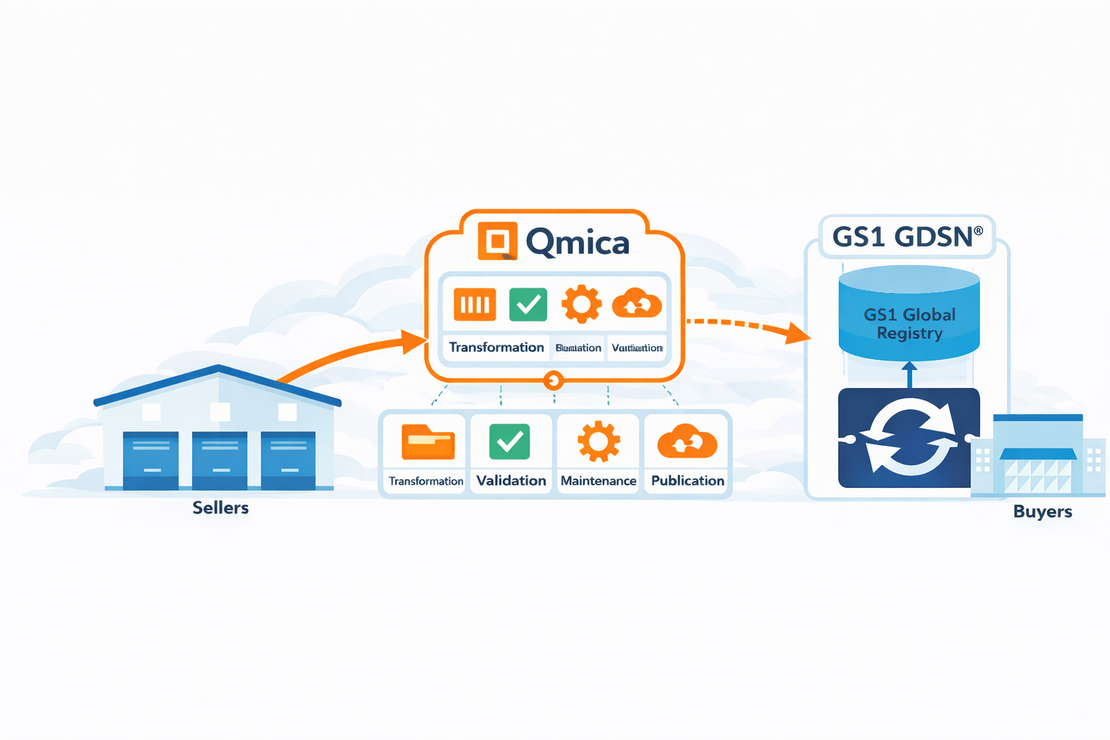
What is GS1?
GS1 is the global organization behind standards for product identification and data exchange. It develops and maintains widely used standards such as GTINs (Global Trade Item Numbers), barcodes, and standardized product attributes.
The objective is clear: create one common language for product data, allowing suppliers, manufacturers, and retailers worldwide to collaborate efficiently.
Without GS1 standards, global trade would be significantly more complex.
What is GDSN?
The Global Data Synchronisation Network (GDSN) is the network through which standardized product data is shared.
Suppliers publish their product data via a certified datapool. Retailers subscribe to that data via their own datapool. The GDSN ensures synchronization between trading partners using standardized messages and validation rules.
In theory, the principle is simple:
Enter data once, share it worldwide.
Why It’s More Complex in Practice
While the foundation is standardized, the practical implementation is far more nuanced.
The GS1 GDSN network is a global ecosystem of datapools, standards, and validation rules. However:
- Data models differ by continent
- Regions introduce their own business rules
- Countries apply additional validations and mandatory attributes
- Retailers add their own requirements on top of GS1
This means that:
- Data accepted in the Netherlands may be rejected in Germany
- Data compliant in Europe may require additional fields in the United States
- Requirements can change due to new releases or local interpretations
Compliance is therefore not static — it is continuously evolving.
The Datapool Structure Challenge
Beyond data requirements, the datapool landscape itself adds complexity.
Not every datapool can freely publish to every other datapool or country. In some cases:
- Multiple datapool memberships are required
- Specific markets mandate publication through a specific datapool
- Suboptimal setups lead to unnecessary costs and operational complexity
For international brands, this often results in:
- Multiple contracts and memberships
- Complex publication flows
- Increased management overhead
- Rejections and time-to-market delays
The Real Challenge
Connecting to GDSN is not the difficult part.
The real challenge lies in maintaining compliance and operational efficiency across multiple markets at the same time.
This requires:
- Continuous monitoring of regional differences
- Strategic datapool selection and optimization
- Intelligent data transformation and mapping
- Ongoing governance
Where Technology and Expertise Come Together
The GS1 Connector is designed to manage these complexities by:
- Handling regional and country-specific data model differences
- Tracking changes in standards and validation rules
- Automating mappings and transformations
- Ensuring market-specific compliant publications
In addition, Qmica supports organizations in:
- Defining the right datapool strategy
- Optimizing memberships
- Designing efficient publication flows
- Reducing unnecessary costs and complexity
Because in global data synchronization, success is not about publishing once.
It is about publishing correctly — everywhere.
Want to elevate your product data compliancy
View all our other interesting stories


Hoe Louis Maes zijn productdata in recordtijd GS1-proof kreeg
Retailers vragen steeds vaker om foutloze en gestandaardiseerde productdata. Voor Louis Maes, specialist in tuinartikelen, werd dat hét moment om …
Why Digital Product Passports Start with Standardized Product Data
Digital Product Passports (DPP) are quickly becoming a key topic across European industries. Driven by the Ecodesign for Sustainable Products …

GS1 starters kit for suppliers in the DIY and Garden & Pet industry!
Good product data is crucial for success. It shapes how your products are presented, sold, and delivered. However, keeping data consistent and …