- News
- 9 maart 2026
- •
- 1 min read
Why Digital Product Passports Start with Standardized Product Data
Digital Product Passports (DPP) are quickly becoming a key topic across European industries. Driven by the Ecodesign for Sustainable Products Regulation (ESPR), DPP will require companies to provide structured and transparent product information throughout the entire product lifecycle.
Digital Product Passports (DPP) are quickly becoming a key topic across European industries. Driven by the Ecodesign for Sustainable Products Regulation (ESPR), DPP will require companies to provide structured and transparent product information throughout the entire product lifecycle.
From material composition and sustainability information to repair instructions and recycling data, organizations will soon need to share significantly more product data than ever before.
However, before companies can publish Digital Product Passports, there is a more fundamental challenge to solve.
Product data needs to be structured, standardized, and reliable.
The Hidden Challenge Behind Digital Product Passports
Many discussions about DPP focus on platforms, QR codes, or data access for consumers and regulators. But the real challenge often lies earlier in the process.
Most organizations store product information across multiple systems such as ERP, PLM, PIM, and supplier portals. As a result, product data is frequently:
- inconsistent
- incomplete
- stored in different formats
- not aligned with international standards
Without standardized product data, building reliable Digital Product Passports becomes extremely difficult.
Why Standards Matter
International standards such as GS1 and ETIM play an important role in structuring product information in a consistent and interoperable way.
By aligning product data with these standards, organizations can ensure that product information can be exchanged efficiently across supply chains, retailers, marketplaces, and regulatory ecosystems.
Standardized product data also provides the foundation needed for future initiatives such as Digital Product Passports.
Preparing Product Data for the Future
At Qmica, we specialize in transforming and validating product data according to international standards.
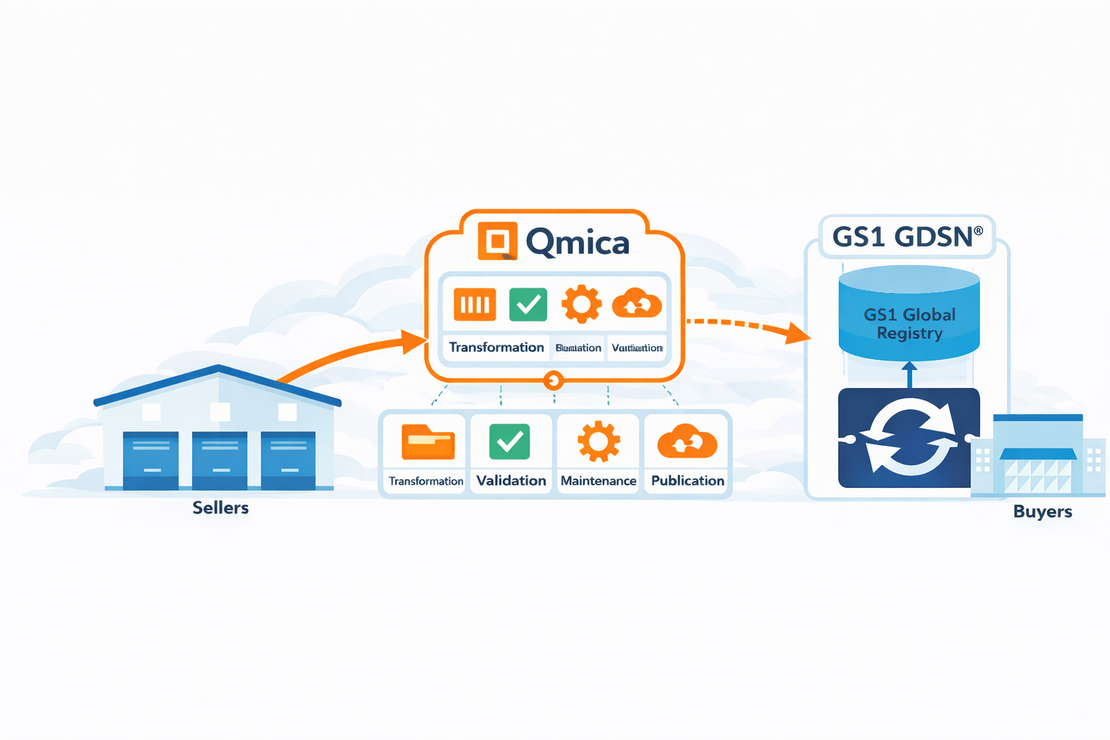
With The GS1 Connector, organizations can standardize product data from their PIM systems and prepare it for distribution across global data ecosystems such as GS1 datapools and ETIM classifications.
By ensuring that product data is:
- structured
- validated
- standardized
- globally publishable
organizations create a strong data foundation for the next generation of digital supply chains — including future requirements such as Digital Product Passports.
Digital Product Passports Start with Data Readiness
While many technologies will contribute to the future DPP landscape, one thing is already clear:
Digital Product Passports start with standardized product data.
Organizations that invest today in structured and standardized product information will be far better prepared for the regulatory and supply chain requirements of tomorrow.
Want to elevate your product data compliancy
Bekijk al onze andere interessante verhalen
Explained: GS1, GDSN and Datapools
What is GS1?
GS1 is the global organization behind standards for product identification and data exchange. It develops and maintains widely …

Qmica introduces three partnership levels for PIM Vendors
At Qmica, we believe in the power of collaboration. To further strengthen and structure our partnerships with PIM Vendors, we are introducing …

GS1 starters kit for suppliers in the DIY and Garden & Pet industry!
Good product data is crucial for success. It shapes how your products are presented, sold, and delivered. However, keeping data consistent and …