ETIM explained
How technical product classification works and why it is essential for digital product data exchange.
ETIM is an international classification standard used to describe technical products based on structured characteristics rather than marketing descriptions.
It enables distributors, wholesalers and marketplaces to compare products consistently across brands.

Need to know about ETIM
What is ETIM?
ETIM (European Technical Information Model) is the international standard for classifying and exchanging technical product information in the professional B2B market.
It provides a common language for manufacturers, wholesalers, distributors and e-commerce platforms to describe technical products in a consistent and structured way.
Unlike GS1, which focuses on product data for the retail and consumer goods market, ETIM is designed for industries where detailed technical specifications are essential for product selection, comparison and procurement.

Transforming product information into structured data
ETIM describes what a product is, not how it is sold.
Instead of marketing names or vendor-specific descriptions, ETIM uses standardized characteristics to represent technical products in a clear and consistent way.
Focus on technical characteristics
Consistent across brands and suppliers
Enables accurate comparison and automation
ETIM allows systems to filter, compare and select products automatically without human interpretation.
The difference between GS1 and ETIM
Both standards help structure product data, but they serve different needs across the supply chain.
Many suppliers use both standards. GS1 enables the exchange of commercial product data with retailers, while ETIM provides the detailed technical specifications required by distributors, wholesalers and professional buyers.
Why ETIM becomes complex
Most organisations store descriptive product data in their PIM, but ETIM requires structured technical data forcing manual interpretation.

Organisations struggle
- Mapping commercial product data to technical characteristics
- Missing specifications from suppliers
- Multiple possible classifications
- Version updates of the model
- Manual classification work

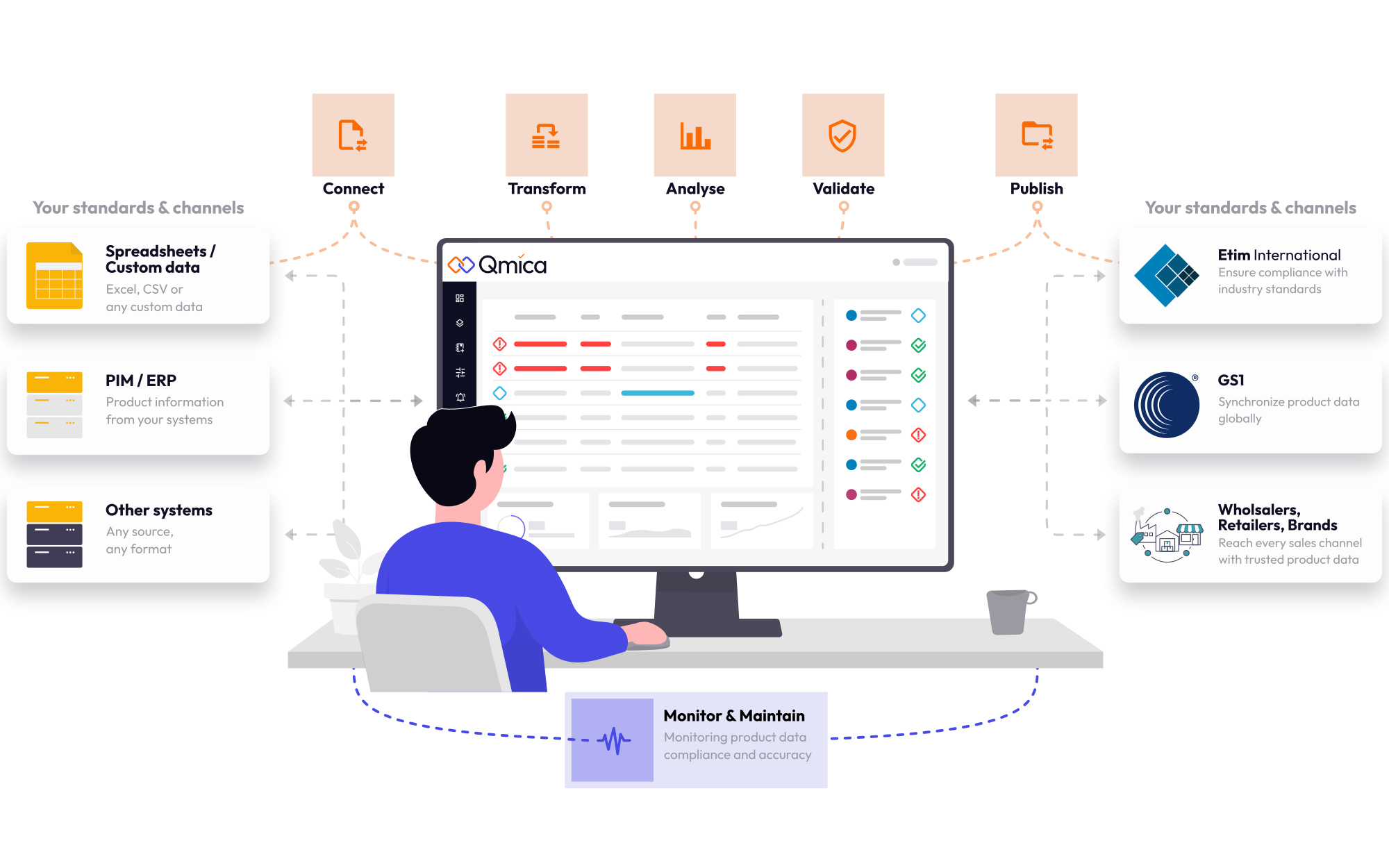
Qmica bridge
Qmica translates existing product specifications into structured classification data and keeps mappings consistent across ETIM versions.

Everything is structured and synchronized
- Classification becomes faster
- Data is consitent
- Data is iease to mainteaint
ETIM in the supply chain
Many downstream systems rely on ETIM to automatically select compatible components, calculate installations or generate quotations.
How its works from manufacturer to end user
Versioning and maintenance
ETIM releases new versions regularly, introducing new classes and modifying characteristics.

Qmica maintains classification mappings when new ETIM versions are introduced.
From ETIM standards to business value
Understanding ETIM is the first step. Qmica helps you apply it across your product data, automate maintenance and keep every channel up to date.