Asked to provide product data through GS1?
More retailers, distributors and other trading partners require suppliers to provide standardized product information through GS1/GDSN.
Has a retailer or customer asked you to provide product data through GS1 or GDSN? You may already have most of the required information in your PIM, ERP, Excel files or other systems. The challenge is getting that data into the right GS1 data model, validating it and publishing it to the right customer.
Keep your existing PIM or ERP. Qmica transforms and validates your product data, then publishes it to the right customers through supported GS1/GDSN datapools. No need to replace your existing systems or enter the same product information twice.
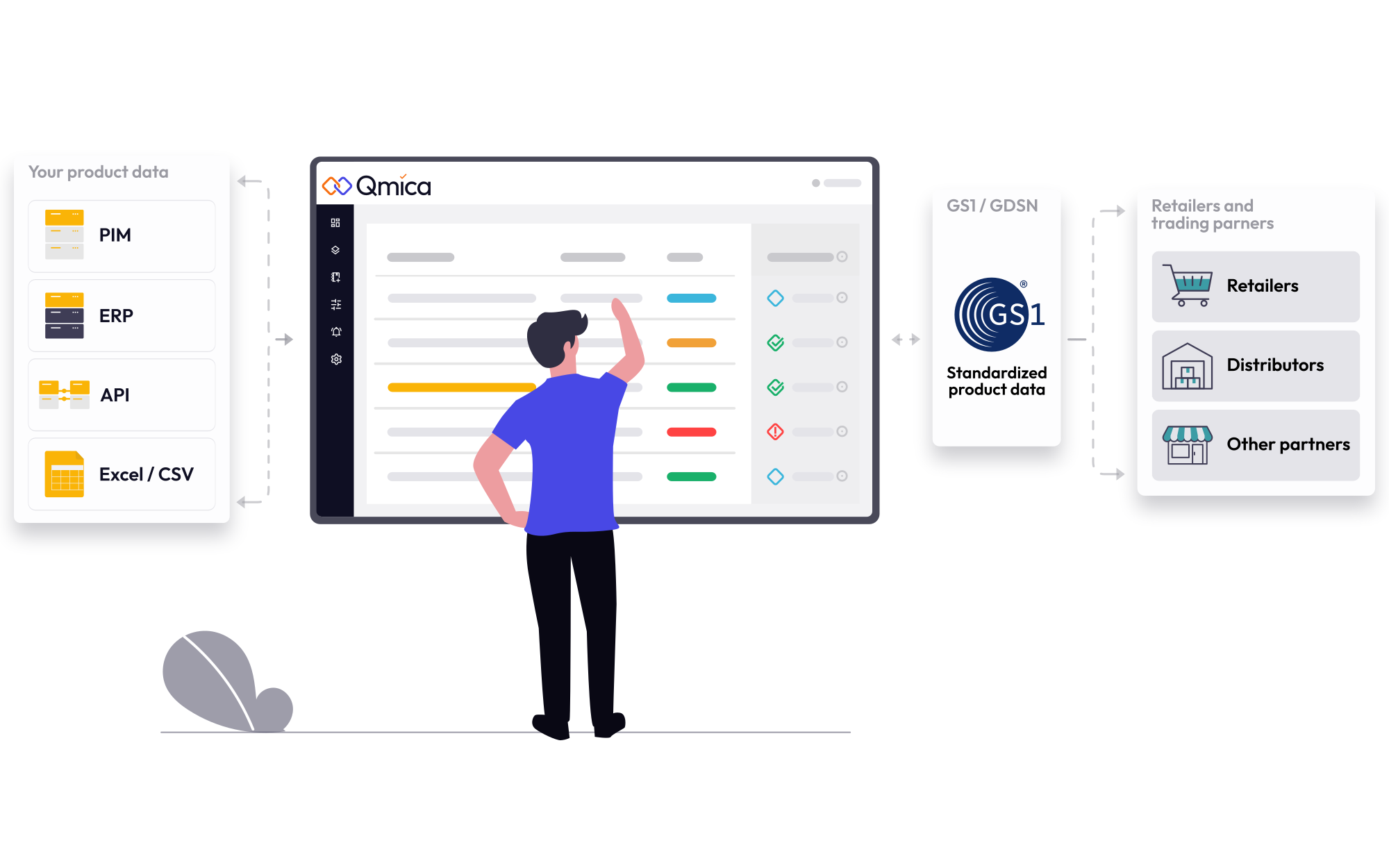
Your customer asks for GS1 product data. What now?
Your product information probably already exists in your PIM, ERP or other internal systems. But your customer may require that information in a specific GS1 data model and expect it to be delivered through GDSN.
That creates a challenge.
How do you transform your existing product data into the required GS1 structure, validate it against the applicable rules and publish it to the right customer?
That's where Qmica comes in.
Specific data model
Your customer requires a specific GS1 data model (e.g. GS1 GDM).
Strict validation rules
Your data must meet the applicable GS1 rules and requirements.
Right customer, right format
The data needs to be published throuch GDSN to the right trading partner.
How Qmica connects your product data to GS1
Qmica takes your product data through five steps, from connecting your existing systems to publishing validated product information to your customers.
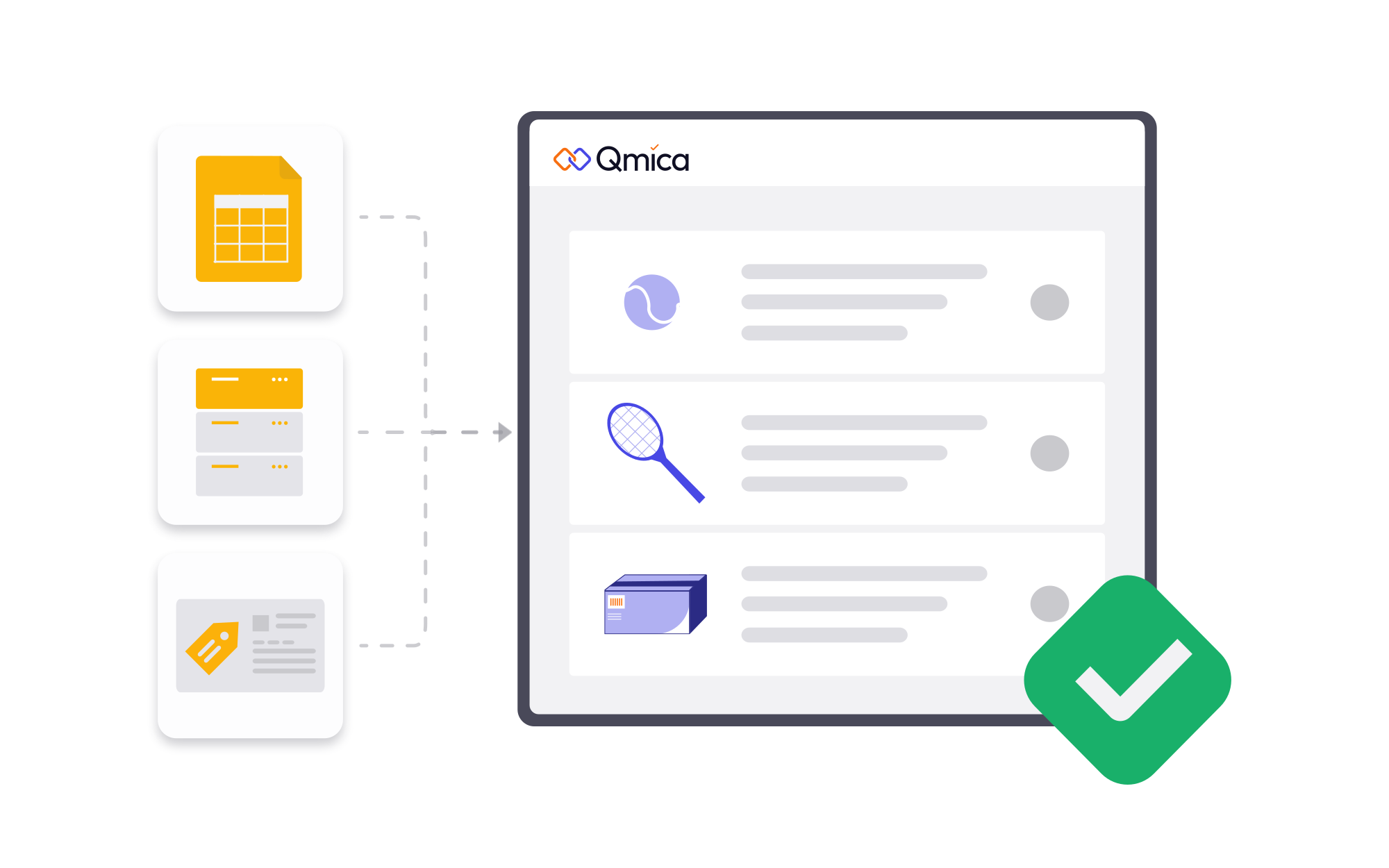
Connect your existing product data
Connect your PIM, ERP or other product data source to Qmica through APIs, files or other integration methods.
Your existing system remains the source of your product information.
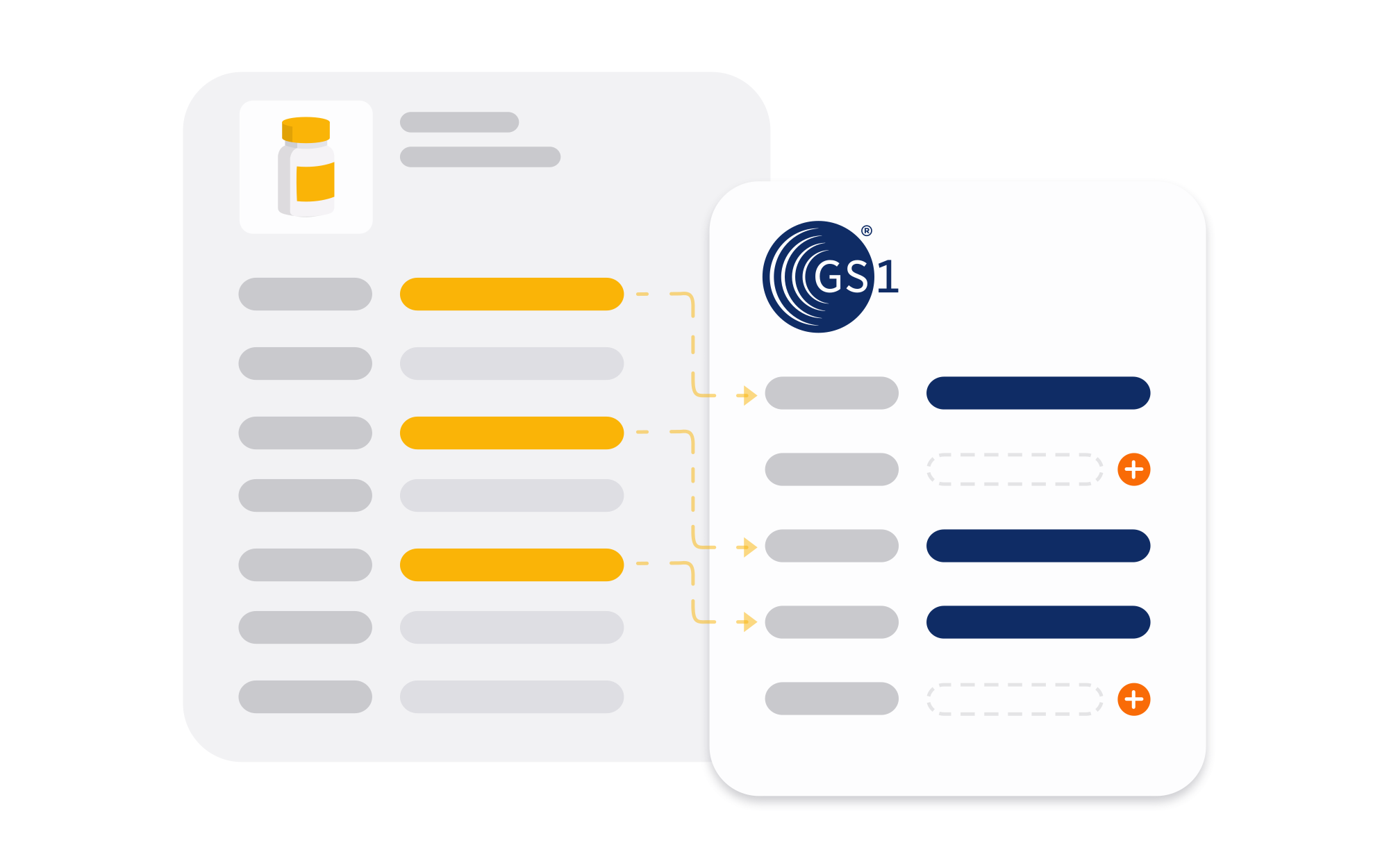
Transform to the required GS1 data model
Your internal product data model does not have to match the GS1 data model.
Qmica maps and transforms your existing product information into the required GS1 structure.

Validate before publishing
Qmica validates your product information against the applicable data model and validation rules.
Missing or incorrect information becomes visible before the data is published.
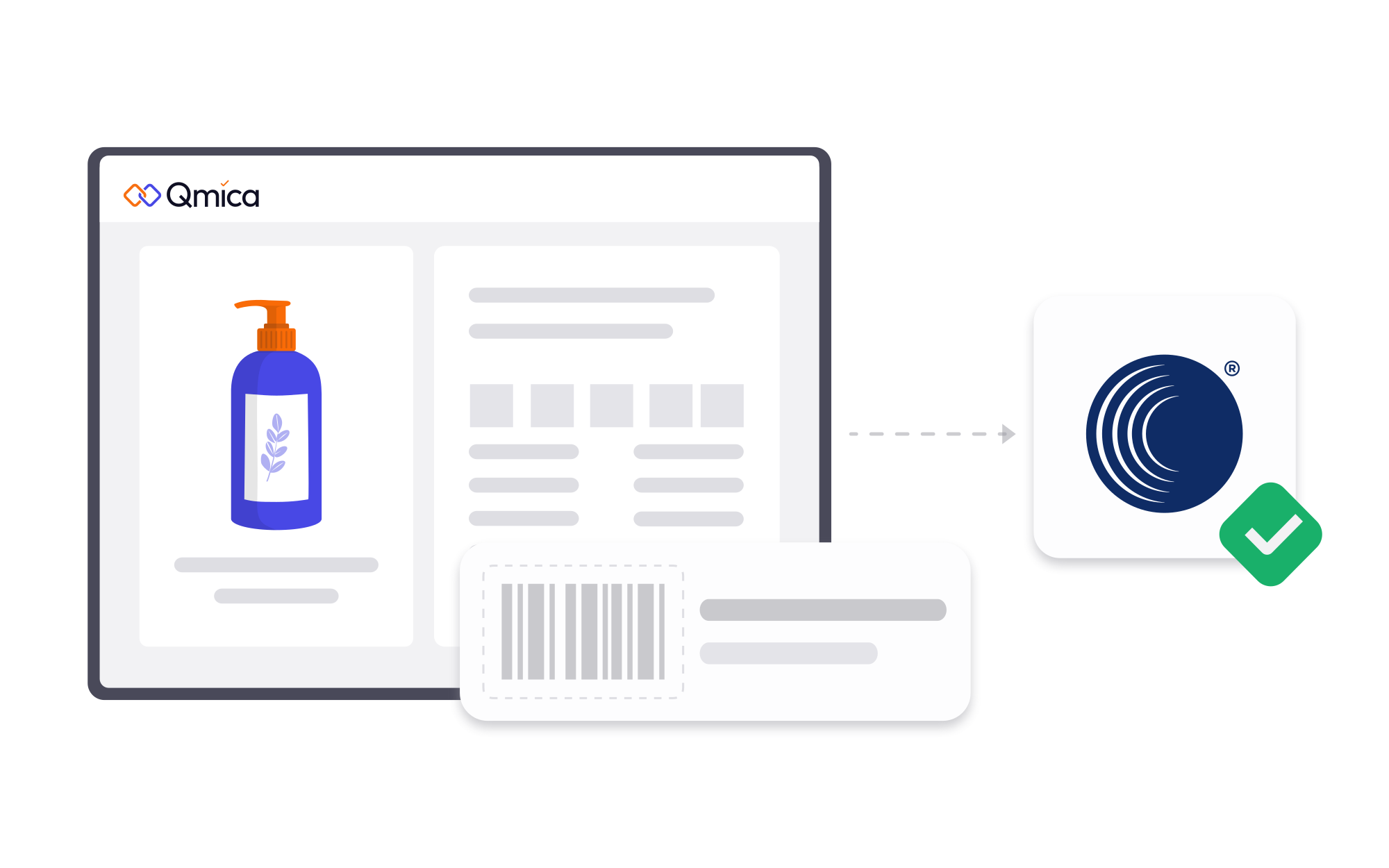
Register your products
New products can be registered through Qmica within the connected GS1/GDSN environment.
Publish to your customers
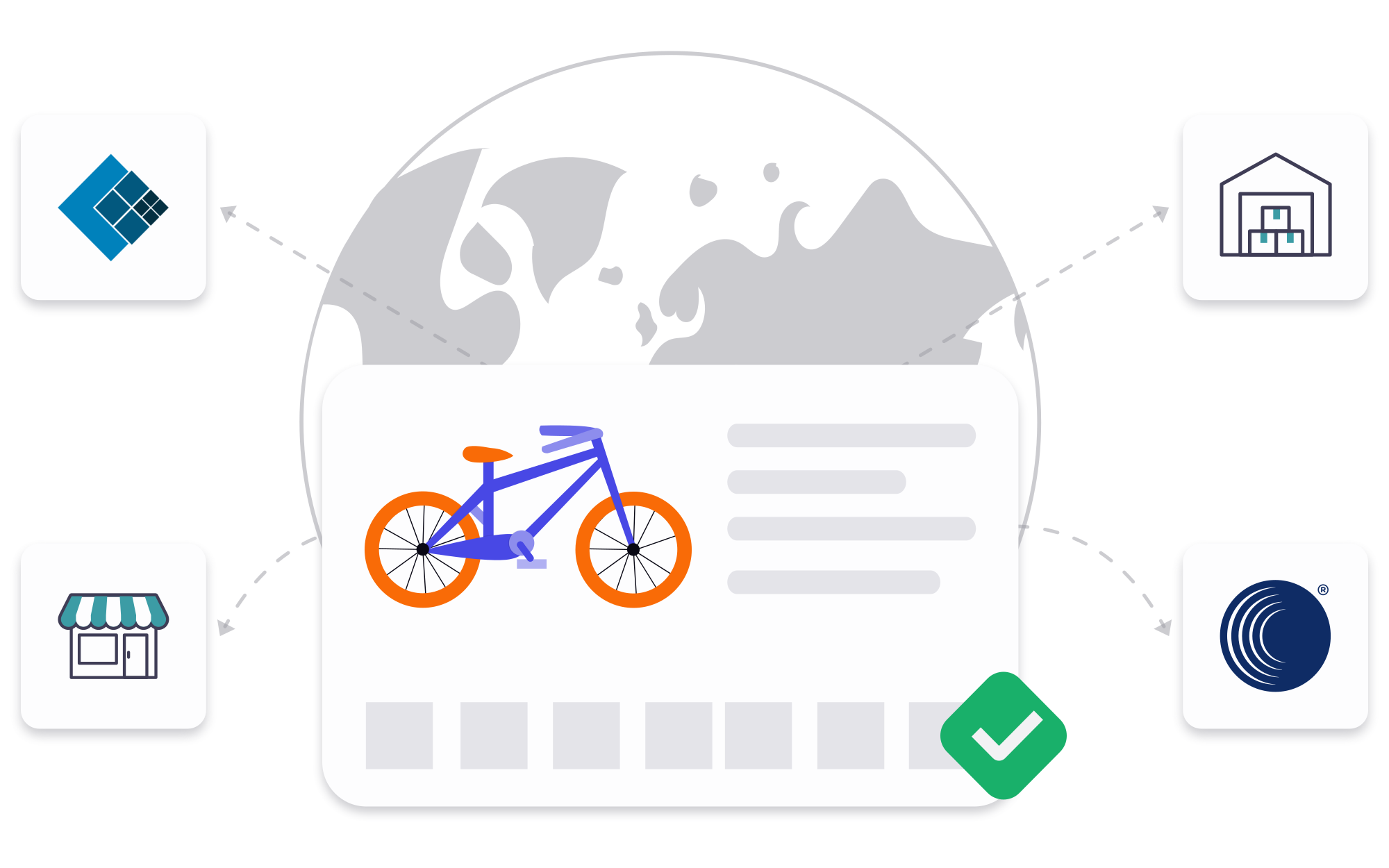
Once your product information is complete and validated, Qmica publishes it through GDSN to the selected retailers and trading partners.
Monitor and maintain
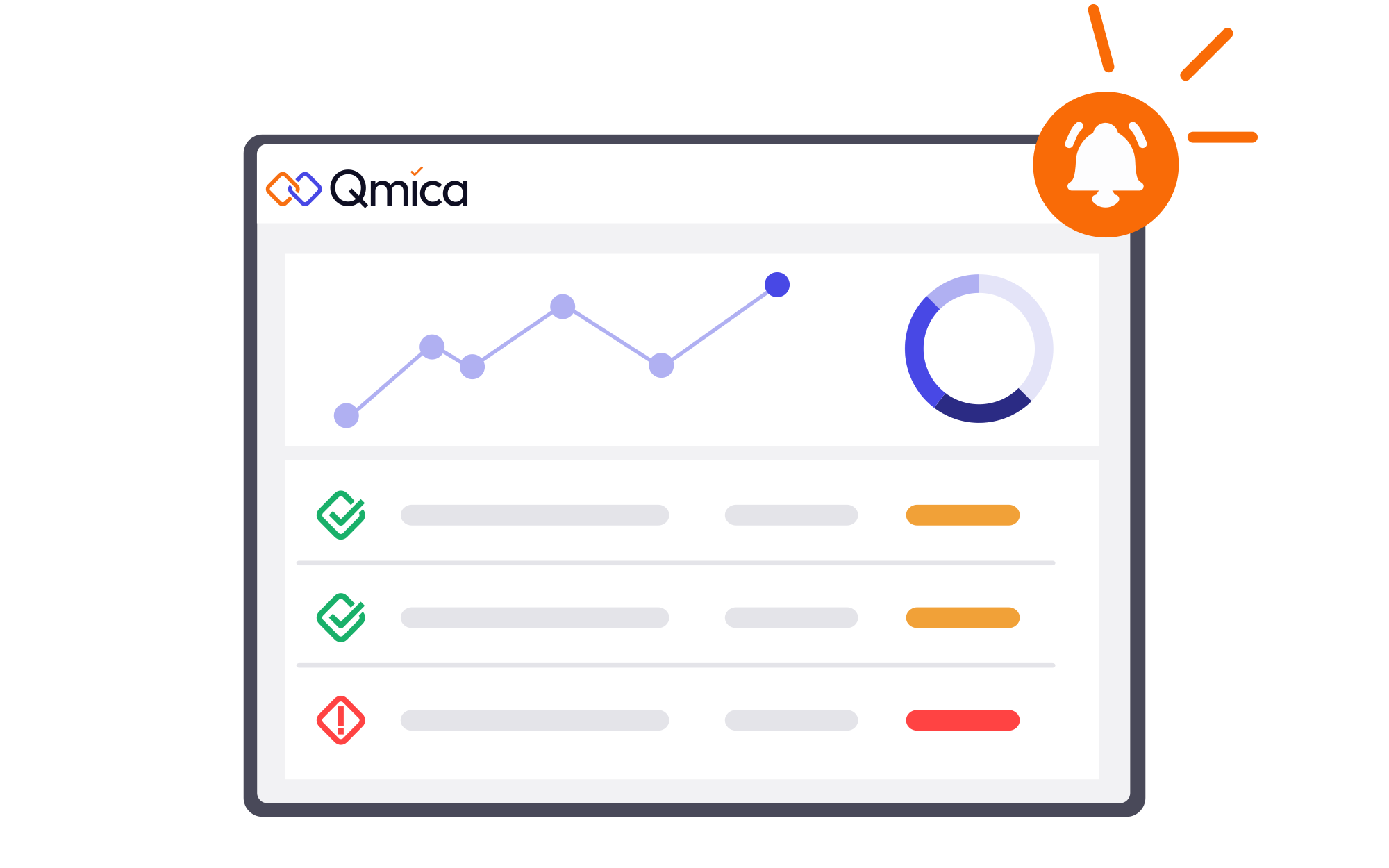
Keep product information and publication status up to date.
Already using a PIM? Keep it.
Qmica works alongside your existing systems as a specialized GS1 and GDSN publication layer.
Connect through APIs or file-based integrations without replacing your current setup.
Explore all PIM integrations
YOUR EXISTING PIM SYSTEMS
- Akeneo
- Inriver
- Sales Layer
- KatanaPIM
- Bluestone PIM
- Pimcore
- Contentserv
- Centric PXM
- + other PIM and ERP systems
Why companies choose Qmica for GS1 product data
Keep your existing systems
No need to replace your PIM or ERP. Qmica works alongside your existing product data infrastructure.
Validate and reuse product data
Identify missing information and validation errors before publishing. Reuse the product information you already maintain instead of entering the same data in multiple systems.
Publish to multiple markets
Manage product data publication for different supported GS1/GDSN markets and datapools from one environment.
Stay aligned with changing standards
Qmica maintains supported data models and publication requirements as standards evolve.
Why is my customer asking for GS1 product data?
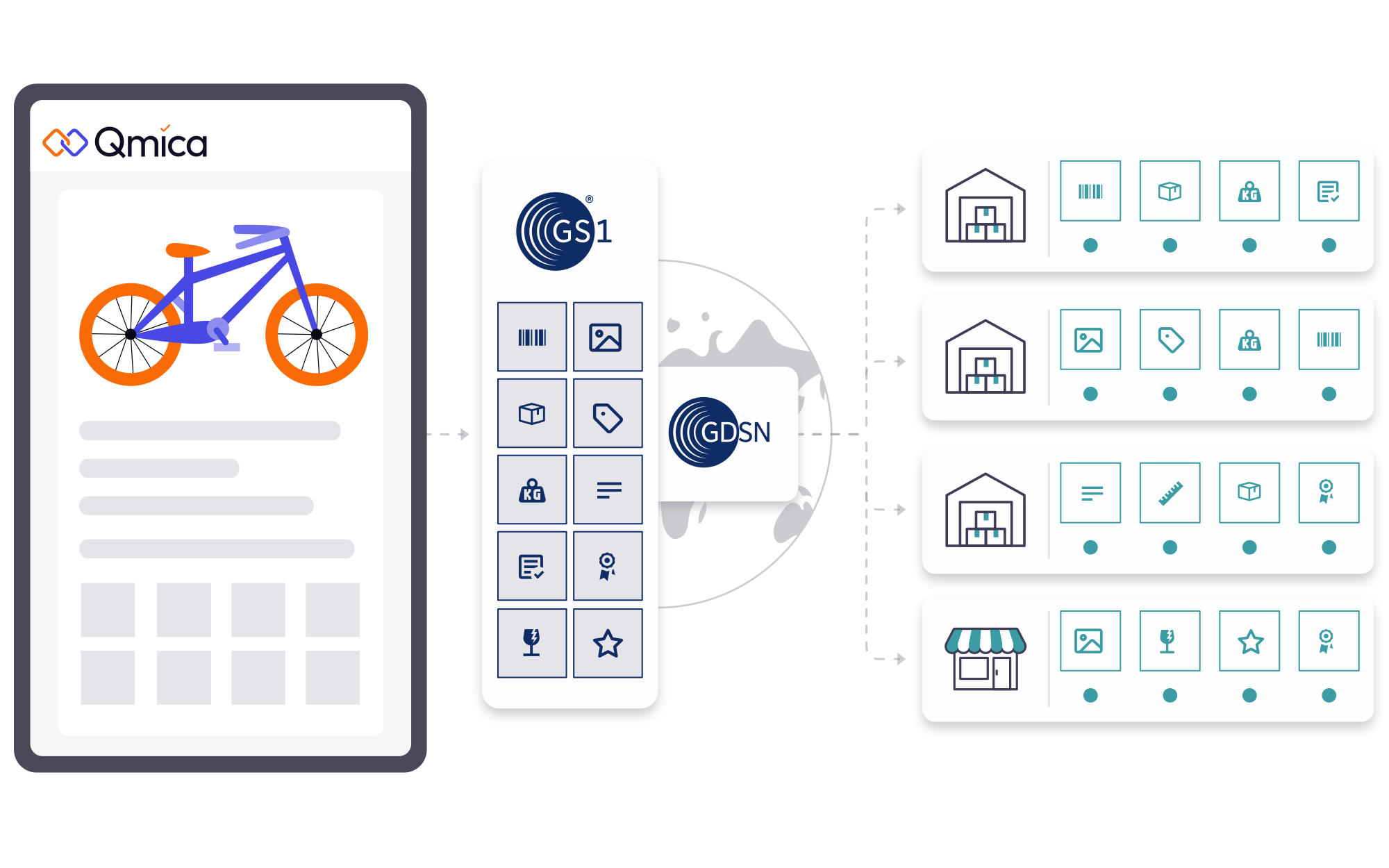
Retailers and suppliers exchange large amounts of product information, including dimensions, weights, logistics information, packaging details, ingredients, regulatory information, sustainability data, images and commercial product attributes.
GS1 provides standardized data models for exchanging this information.
Through the Global Data Synchronisation Network (GDSN), suppliers can make standardized product information available to retailers and other trading partners.
When a customer asks you to provide product data through GS1, you will typically need to provide the required information according to the applicable GS1 data model and publish it through the appropriate GDSN route.
FAQs
If your customer uses GS1/GDSN to receive product information, providing the required data may be part of their supplier onboarding or product listing process. The exact requirements depend on the customer, market and product category.
GDSN stands for Global Data Synchronisation Network. It enables suppliers and recipients to exchange standardized product information through GS1-certified datapools.
That depends on the markets and customers you need to reach. Qmica connects to supported GS1/GDSN datapools and manages the publication process from your product data source to the required destination.
No. Qmica can use existing product information from your PIM, ERP, API, Excel, CSV or other structured data sources.
Yes. Your PIM can remain the source of your product information while Qmica handles the GS1-specific transformation, validation and publication.
Qmica works alongside existing PIM systems, including Akeneo and Inriver, to transform product information into the required GS1 data model, validate it and publish it through supported GS1/GDSN datapools.
Explore our supported PIM vendors to see which systems Qmica can work with.
Yes. Product information does not have to come from a PIM. Qmica can also process structured product information from Excel and CSV files.
Yes. Validation is a core part of Qmica. Product information is checked against the relevant data model and validation rules before publication.
Yes, Qmica is designed to support product data publication across multiple supported GS1/GDSN markets and datapools from one central environment.
No. Qmica also supports other product data standards and data models, including ETIM and custom data models.
Not currently.
The initial mapping between the customer’s product data and the relevant GS1 requirements is established together with the customer.
Once this mapping has been configured, Qmica supports the transformation, validation and publication processes.
This approach helps ensure that the mapping reflects the customer’s actual product data structure and business requirements.
No.
Qmica is designed to complement PIM and ERP systems, not replace them.
PIM platforms remain responsible for managing, enriching and distributing product information across the organisation.
Qmica focuses specifically on the GS1-related processes needed to prepare, validate and publish that information.
This separation allows organisations to benefit from their existing PIM investment while adding specialised GS1 capabilities.
Once the mapping between the source system and the relevant GS1 requirements has been established, Qmica can help identify gaps in the available product information.
This can include missing mandatory attributes, incomplete information and data that does not meet applicable validation rules.
Identifying these issues before publication helps organisations understand which information needs attention.
The objective is to resolve data quality issues earlier in the process, rather than discovering them through datapool rejections.
Potentially, yes.
Without a dedicated GS1 solution, organisations may need to implement and maintain GS1-specific transformations, validation rules and publication processes within their PIM environment or through custom integrations.
Qmica provides a specialised layer for these processes.
Depending on the existing architecture and requirements, this can reduce the need for GS1-specific custom development and ongoing maintenance.
For PIM vendors and implementation partners, this creates an opportunity to focus more resources on their core implementation activities.
GS1 requirements can introduce additional complexity into PIM projects, particularly for customers operating across multiple markets.
By working with Qmica, PIM vendors and system integrators can complement their solutions with specialised GS1 expertise and functionality.
Potential benefits include:
• Less GS1-specific custom development.
• Reduced responsibility for maintaining GS1-specific logic.
• Support for complex market requirements.
• More predictable GS1 integration projects.
• Additional opportunities to serve international customers.
Qmica helps partners deliver a more complete solution without having to develop every GS1 capability themselves.
Not entirely.
The PIM still needs to contain the relevant source data, and the mapping between the PIM and Qmica must remain aligned with the customer’s product information structure.
However, Qmica can handle supported GS1-specific transformation, validation and publication requirements.
This can reduce the amount of GS1-specific logic that organisations need to implement and maintain directly in their PIM.
Before selecting a solution, companies should ask:
1. Does GS1 support include only data modelling, or also validation and publication?
2. Which GS1 markets and datapools are supported?
3. Are country-specific requirements and local data models included?
4. Who maintains the solution when GS1 requirements change?
5. Are GS1 updates included in the standard service, or do they require additional development?
6. Can the solution identify missing or invalid product data before publication?
7. What additional integrations or services are required?
8. How does the solution scale when we expand into new markets?
These questions help organisations understand the practical scope of GS1 support and the ongoing responsibilities involved.
Your customer asked for GS1 product data. What's next?
You already have the product data.
Qmica gets it into the right format, validates it and publishes it to the right destination.
Tell us which customer is requesting the data, which market you need to publish to and where your product information is currently managed.
We'll show you how Qmica can connect your existing product data environment to GS1/GDSN.